
How Do You Turn a Hot Tub On and Off?
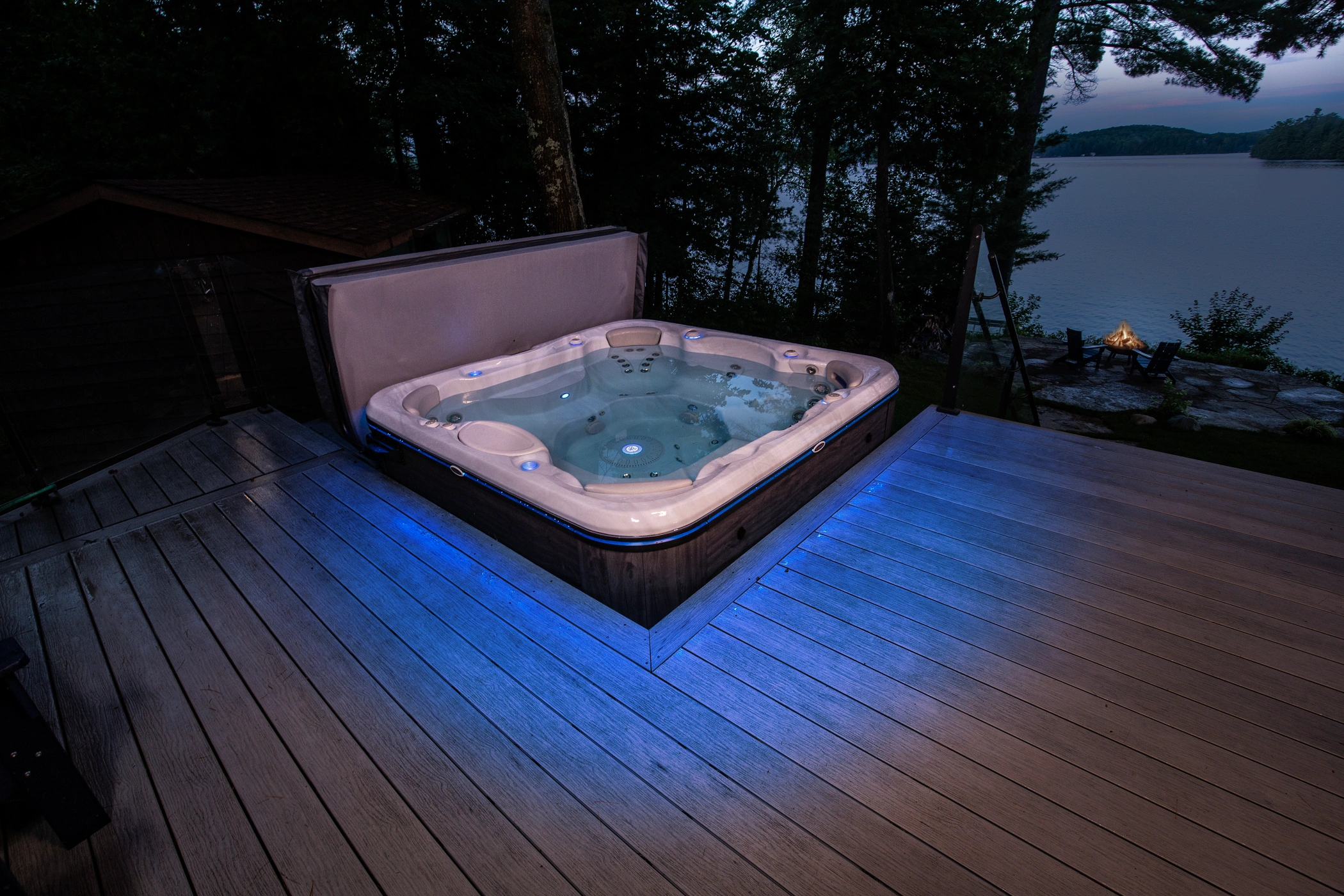
Turning a hot tub on, whether you call it a hot tub or a spa, takes about fifteen minutes of actual work when you first fill the tub, then hours of the system heating itself. Turning it fully off is something you’ll almost never need to do. Short of draining it, moving it, or closing it down for the season, Hydropool hot tubs have a built-in Standby mode that can handle every pause better than the GFCI breaker does. Consistently turning the GFCI breaker on and off will eventually weaken the breaker’s effectiveness.
The night before the first soak
You’ve just had it delivered, it’s full of water for the first time, and somebody’s already asked to come try it out this weekend. Before that happens, there’s a startup sequence worth doing right, because doing it wrong is how a brand-new pump gets damaged in its first hour.

Filling and firing it up
Fill through the skimmer opening to about four inches above the skimmer, with the jets open, before you touch the power at all. Then:
- Turn the main power on at the breaker or GFCI panel.
- Put the pump into low speed from the topside control panel.
- Let the system run its priming cycle. Some panels display a running-pumps message for four to five minutes before switching to normal operation.
- If you don’t see water moving from the jets within about 15 seconds, the pump likely has trapped air. Open the hose bib to release it, and close it again once flow is steady.
One rule matters more than the rest: never let the pump run for more than 5 minutes without water moving through it. Running dry that long risks damaging the pump and can push the control system into an overheat condition. If it hasn’t primed by then, shut the power off and loosen the union on the pump’s discharge side to release the air lock properly, instead of leaving it to grind. Or contact your local retailer for more advice on how to clear an air lock.
There’s no separate switch to hunt for on the heater, either. Raise the set temperature above the current reading on the topside panel and it engages on its own, with a “Heating to XX°F” message confirming it’s working; lower the set point and you’ll see “Cooling to XX°F” instead as the heater simply stops. Turning a hot tub on, in the heater’s case, just means telling it what temperature you want.
Between soaks, you’re not turning anything off
Lights and jets switch off from the topside panel whenever you’re done for the night, while filtration and heating keep running on their own schedule in the background. That’s by design. The tub, or the spa, if that’s what you grew up calling it, is meant to sit ready, not get rebooted every time nobody’s in it.
Turning the jets on and off
The pump keys on the topside panel cycle through the same pattern on most Hydropool panels: one press for low speed, a second press for high, a third press to shut them off. There’s no need to babysit them, either. Every panel has a built-in pump time-out, typically 15 to 30 minutes depending on the model, so the jets shut themselves off even if nobody remembers to. If you want quiet sooner than that, press the key again rather than waiting it out.
Standby is the pause button
For quick maintenance, like rinsing a filter, Standby (under Settings, then Maintenance) shuts every pump off for 30 minutes and brings itself back afterward. One quirk worth knowing: if the heater’s mid-cycle when you hit Standby, it can take up to 20 minutes to go quiet, because it wants to finish heating first. Drop the set temperature below the current water temperature before you start, and it stops right away instead of making you wait.
Away mode is the vacation setting
For anything longer than a maintenance break, the Away setting is the one to use, not the breaker. It drops the set point by about 20°F and scales back filtration, which keeps the water circulating enough to stay sanitary and freeze-protected without running at full cost while nobody’s using it. It’s the same logic behind Hydropool’s own answer to whether you should turn a hot tub off when it’s not in use: generally, don’t. Let the tub manage itself.
When the breaker is the right call
Full power-off has a real job: maintenance, draining, moving the tub, or closing it down for winter. What it isn’t is a nightly habit, because a GFCI breaker is a safety device first. The CPSC has been warning about electrocution risk around pools, spas, and hot tubs for exactly this reason, and its own fact sheet on how GFCIs work explains why that circuit is doing more for you than a simple on/off switch. If yours trips on its own, that’s a problem to get diagnosed, not a breaker to keep resetting.
Closing it down for the season
If you’re not running the tub through winter, draining and winterizing it properly matters more than any other shutdown you’ll do. At a minimum: drain it completely, pull the filter cartridge and any removable jet inserts and caps, and use a wet/dry vacuum to clear water from the jet openings, filter housing, and plumbing lines. Add only non-toxic, potable RV antifreeze to the pump wet ends and jet channels, never automotive antifreeze, then reinstall everything and cover it well. Freeze damage isn’t covered under warranty, which is why Hydropool specifically recommends having an authorized retailer handle the first winterizing so you know exactly what it should look like next time.
The hot tub modes, at a glance
| Mode | What happens | Use it for |
|---|---|---|
| Standby | All pumps off for 30 minutes, then it restarts on its own. | Quick maintenance, like a filter rinse. |
| Away / Economy | Set point drops about 20°F; filtration and heating keep running at a lower level. | Trips, long weekends, the off-season lull between gatherings. |
| Full power-off (breaker/GFCI) | Everything stops, including freeze protection, until you turn it back on. | Draining, moving the tub, or closing it down for winter. |
If you’re weighing this against your electric bill
None of these modes are secret energy drains. If you want the real numbers behind running versus cycling a hot tub, here’s the honest breakdown.
FAQ
Do I need to turn my hot tub off every night?
No, and doing so tends to backfire. Hydropool’s own guidance is to keep the tub running at your set temperature rather than cycling it, since reheating from a cooled-down tank generally takes more energy than holding steady. Lowering the temperature between soaks is fine; shutting it down at the breaker every night isn’t the move.
How is Standby mode different from just switching off the breaker?
Standby is temporary and smart about it: pumps stop for 30 minutes for quick maintenance, then everything picks back up on its own, including freeze protection. The breaker doesn’t know the difference between five minutes and five weeks, so it leaves the tub with no protection at all until someone flips it back.
Do hot tub jets turn off automatically?
Yes. Every topside panel has a built-in pump time-out, typically 15 to 30 minutes depending on the model, so you never have to remember to switch them off yourself. Press the jet or pump key again before that window’s up if you want them off sooner.
What is Sleep Mode on my hot tub, and how do I get out of it?
Several Hydropool keypads have a labeled Sleep Mode key next to the display’s day/night contrast control, but the owner’s manual doesn’t spell out exactly what it changes on every model, so it’s worth checking the printed manual for your specific keypad or asking your dealer rather than guessing. If what you want is just powering things down for a bit, Standby under Settings, then Maintenance, is the clearly documented way to do that, with a plain Cancel to get back out.
Can I winterize my own hot tub, or should I call my dealer?
You can do it yourself if you’re comfortable draining the plumbing completely and using the right non-toxic RV antifreeze, never automotive antifreeze. That said, freeze damage isn’t covered under warranty, and Hydropool specifically recommends having an authorized retailer handle it the first year so you can see exactly how it’s done.
Why does my breaker keep tripping when I try to turn the tub on?
A GFCI that trips repeatedly is protecting you from a real fault, not being oversensitive. It usually points to a heater element, a loose connection, or moisture where it shouldn’t be. That’s a call to your dealer or an electrician, not a breaker to keep resetting.
Get the first startup right with your dealer
The first fill and the first winterizing are the two moments worth doing with someone who’s done it a hundred times. A Hydropool dealer can walk you through the startup in person and handle that first seasonal shutdown, so every soak after that, and every quiet stretch in between, takes care of itself.