
Can I Turn My Hot Tub Off?
At a glance
You can turn your hot tub off, but for anything short of draining it, moving it, or closing it down for the season, don’t turn it off. Lower the set point instead of cutting power. Reheating from a cooled-down hot tub almost always costs more energy than holding it steady, and a fully powered-down hot tub isn’t ready for the next gathering without a multi-hour wait once you’re back.

Leaving town with a gathering already on the calendar
You’re heading out for a week, the tub’s been running fine since last weekend’s get-together, and the next one’s already loosely planned for the weekend you’re back. Whether to shut it down while you’re gone comes down to one honest question: what happens to the water and the energy bill while nobody’s using it.
A short trip: lower it, don’t kill it
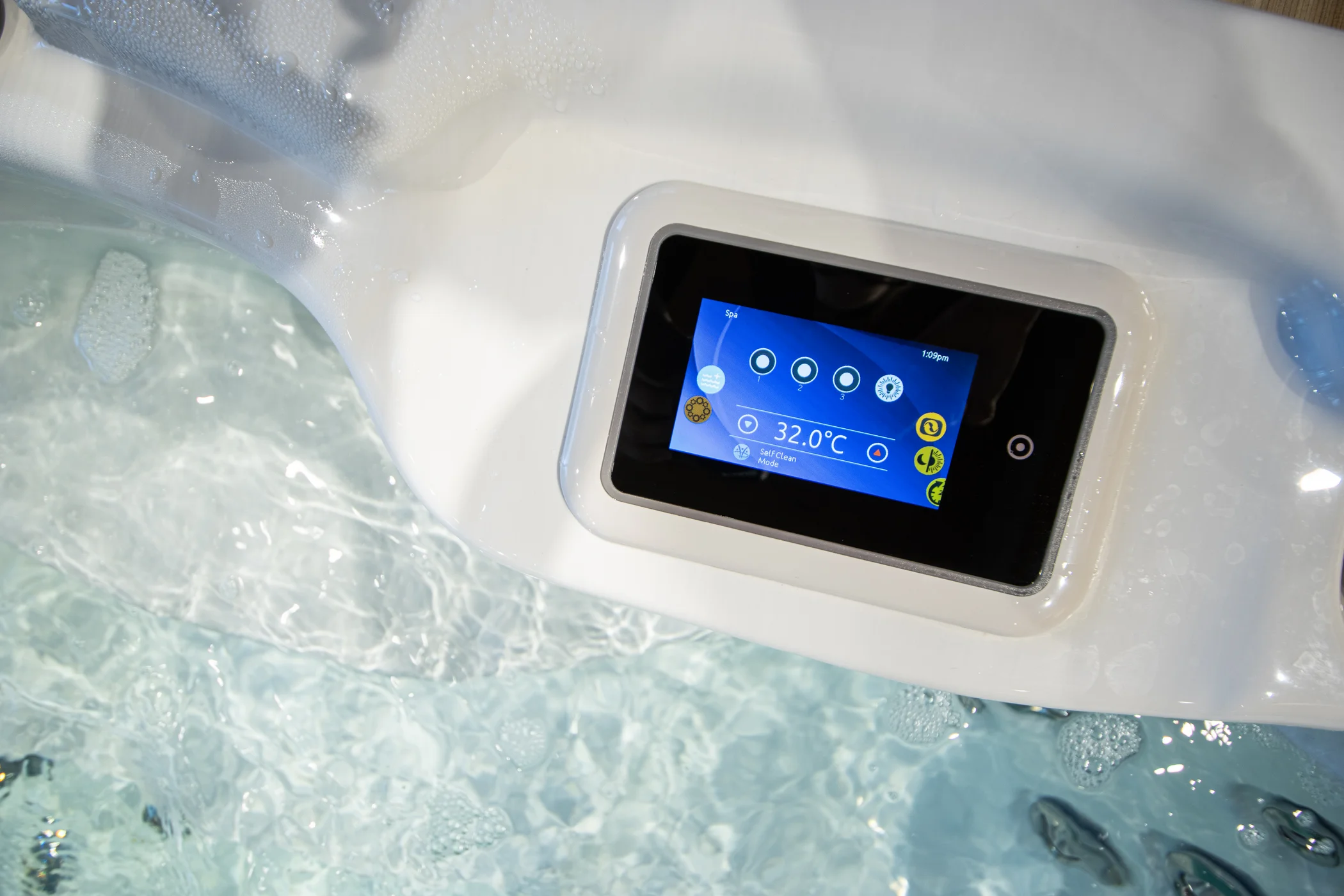
For anything from a few days to about two weeks, Away mode is the setting built for this, not the breaker. It drops the set point by about 20°F, so a tub normally running at 100°F settles closer to 80°F. That’s the practical answer to what temperature a hot tub should sit at when it’s not in use, a number Hydropool builds into Away mode itself rather than one you need to dial in by hand. That drop is enough to cut energy use meaningfully while filtration keeps the water circulating and the pipes protected from freezing. Clean the filter and run a shock treatment before you go, and if nobody’s checking on it, ask a neighbor to glance at it partway through the trip.
Nightly shutdowns aren’t the money-saver they look like
Turning it off every night feels responsible, but the math works against it. Reheating from a cooled tank most nights uses more energy than holding a steady temperature would, and the water sits without circulating in between, which is exactly the setup for a filter and a fill that need more attention than they should. If the goal is trimming cost day to day, lowering the set point by a couple of degrees does more for the bill than a nightly on-off cycle, without anyone noticing much difference getting in.
A month or more, or the whole off-season
This is where a full power-off finally makes sense, but draining and winterizing properly is the real answer, not just cutting power and walking away. The full walkthrough is here, and it’s worth doing right the first time since freeze damage from an improperly drained tub isn’t covered under warranty.
Why holding steady usually wins
The same logic applies to a hot tub as to a home water heater: a well-insulated system loses less heat sitting at a steady temperature than it costs to bring cold water back up to that temperature repeatedly. The U.S. Department of Energy’s guidance on insulating a water heater tank walks through the same math, and its advice on turning down the heat without risking frozen pipes is the same balance a hot tub’s Away mode is built to strike: lower, not off.
What to do, by how long you’re gone
| Time away | What to do | Why |
|---|---|---|
| Overnight or a few days | Leave it running as normal | Nothing’s gained by shutting it down for this short a stretch |
| A trip of a few days to two weeks | Switch to Away mode and clean the filter before you leave | Cuts energy use while keeping water circulating and pipes protected |
| A month or more, or the off-season | Drain and winterize properly | At this length, a full drain beats running anything, even in Away mode |
None of this requires much thought once it’s set
If keeping up with all of this sounds like more than you signed up for, here’s the honest rundown of what hot tub upkeep involves week to week, and here’s what running it, rather than cycling it, adds to a monthly bill.
FAQ
Should I turn my hot tub off every night, or just leave it running all the time?
Leave it running. Reheating from a cooled-down tank generally uses more energy than holding a steady temperature, so nightly shutdowns tend to cost more than they save, on top of giving bacteria more of a chance to build up in water that isn’t circulating. Leaving it running at your normal set point, or dropped into Away mode for a longer stretch, both beat cycling it off and on.
What’s the actual difference between turning it off and using Away mode?
Away mode drops the set point by about 20°F instead of cutting power entirely, so filtration keeps running enough to protect the pipes and hold water quality. A full power-off does neither, which is why it’s reserved for draining, moving, or winterizing rather than a two-week trip.
Will lowering the temperature a couple of degrees make a real difference?
Yes, more than most people expect, and without a noticeable drop in comfort day to day. Small, consistent setbacks add up in a way that one big swing from hot to cold and back doesn’t.
I’m heading out of town for two weeks. What should I do before I leave?
Clean the filter, run a shock treatment, and switch to Away mode rather than powering down. If nobody’s checking on it while you’re gone, ask a neighbor to glance at it partway through the trip.
Is it ever fine to fully power it off?
Yes, for draining, moving it, servicing it, or closing it down for a season you won’t use it. Outside of those situations, a lower set point does the job better than a full shutdown.
Why won’t my hot tub’s temperature go down after I lower the set point?
Because there’s no active cooling system behind that number, only the heater turning off. Lowering the set point tells the heater to stop, and the water then loses heat slowly to the surrounding air while filtration keeps circulating; nothing is forcing it down faster. A well-insulated cover and cabinet, which is exactly what you want the rest of the time, is also what makes that drop take longer than people expect. Give it several hours, not minutes, before assuming something’s wrong.
Come home to a tub that’s ready, not cold
Set it to Away mode before a trip and the tub is exactly where you left it when you’re back: warm, clean, and ready for whoever’s coming over next, instead of hours from being usable. That’s the whole point of the setting.