
What to Wear in a Hot Tub: What’s Comfortable, Safe, and Spa-Friendly?
At a glance
When someone asks what to wear before they come over, the short answer is a real swimsuit, whether that’s a bikini, board shorts, or a one-piece, nothing straight out of the laundry hamper, and nothing you’d mind losing to the filter. There’s no official hot tub dress code, spa or jacuzzi, whatever you’re used to calling it; there’s just a practical one. Polyester, nylon, and spandex blends hold up in hot, chemically treated water; cotton, jewelry, and loose hair near the jets don’t.

The question every host gets asked
Somebody texts back ‘wait, what do I wear?’ the night before people come over, and it’s a fair question. The answer isn’t complicated, but getting it slightly wrong is how you end up fishing a hair tie out of the filter basket the next morning.
What holds up in hot water
Polyester, nylon, and spandex blends are built for this. They resist the sanitizer, keep their shape, and dry faster than most other fabrics. Cotton is the one to leave in the drawer: it soaks up water, takes ages to dry, and breaks down faster in hot, treated water than a proper swimsuit will. If people are over often, a suit that lives at your place just for the tub cuts down on whatever they tracked in from the gym or the street.
Bikinis, board shorts, and the closest thing to a dress code
There’s no posted dress code for a home hot tub, but there’s a practical one, and it applies the same way whether you’re in a bikini, board shorts, or a one-piece. The fabric rule doesn’t change with the cut: synthetic over cotton either way. What does matter with a bikini specifically is how secure it is. A loosely tied top or bottom can work its way loose near jet suction, so a snug fit or a suit with real coverage is the better choice if you’re planning to move around near the jets rather than sit still and soak. If it’s a natural hot spring rather than a backyard tub, the same fabric logic holds, though it’s worth checking that specific spring’s own posted rules, since norms vary spot to spot in a way they don’t in your own backyard.
Skip the suit straight out of the wash
Detergent and fabric softener residue left in swimwear is a known contributor to foamy water; it’s the same reason Hydropool’s own care instructions warn against using detergent on the acrylic shell, since the residue throws off water chemistry either way. Rinse a new suit in plain water before its first wear, or skip the fabric softener on wash day. If foam does show up, here’s what’s behind it and how to clear it.
Rings, chains, and hair
Take the jewelry off before you get in. Chemicals tarnish metal, small pieces disappear into the filter, and anything dangling has no business near a jet or skimmer opening. The same goes for long hair: tie it back. Every hot tub relies on suction guards to keep hair and loose items away from the intakes, and federal guidance on pool and spa drain safety is blunt about why: a blocked or damaged one is how hair or a body part gets trapped. Give the returns a wide berth and it’s a non-issue.
Before anyone gets in
A quick rinse-off before soaking cuts down on the body oils, sweat, and cosmetics that end up in the water, which is exactly what the CDC recommends before getting into any hot tub. Skip applying fresh lotion, sunscreen, or heavy perfume right beforehand too. It’s one more thing your filter has to deal with, and it’s an easy one to avoid.
Just family, not a crowd
For a private soak, going without a suit is a personal call plenty of owners make, and it’s a common one. Shower first regardless of what you’re wearing or not wearing. It’s the gatherings with guests where a suit is the easier default for everyone.
Kids, and anyone who should take it easy
Put kids in a properly fitted swimsuit or swim diaper, and keep their time in short. Water at or above body temperature isn’t recommended for young children, so the set point matters more than the outfit once they’re in. If pregnancy or a medical condition is in the picture, that’s a conversation for a doctor before it’s a wardrobe question. Hydropool’s rundown of hot tub do’s and don’ts and this guide to choosing a family-friendly setup both go deeper on the family side of things.
What changes once it’s cold out
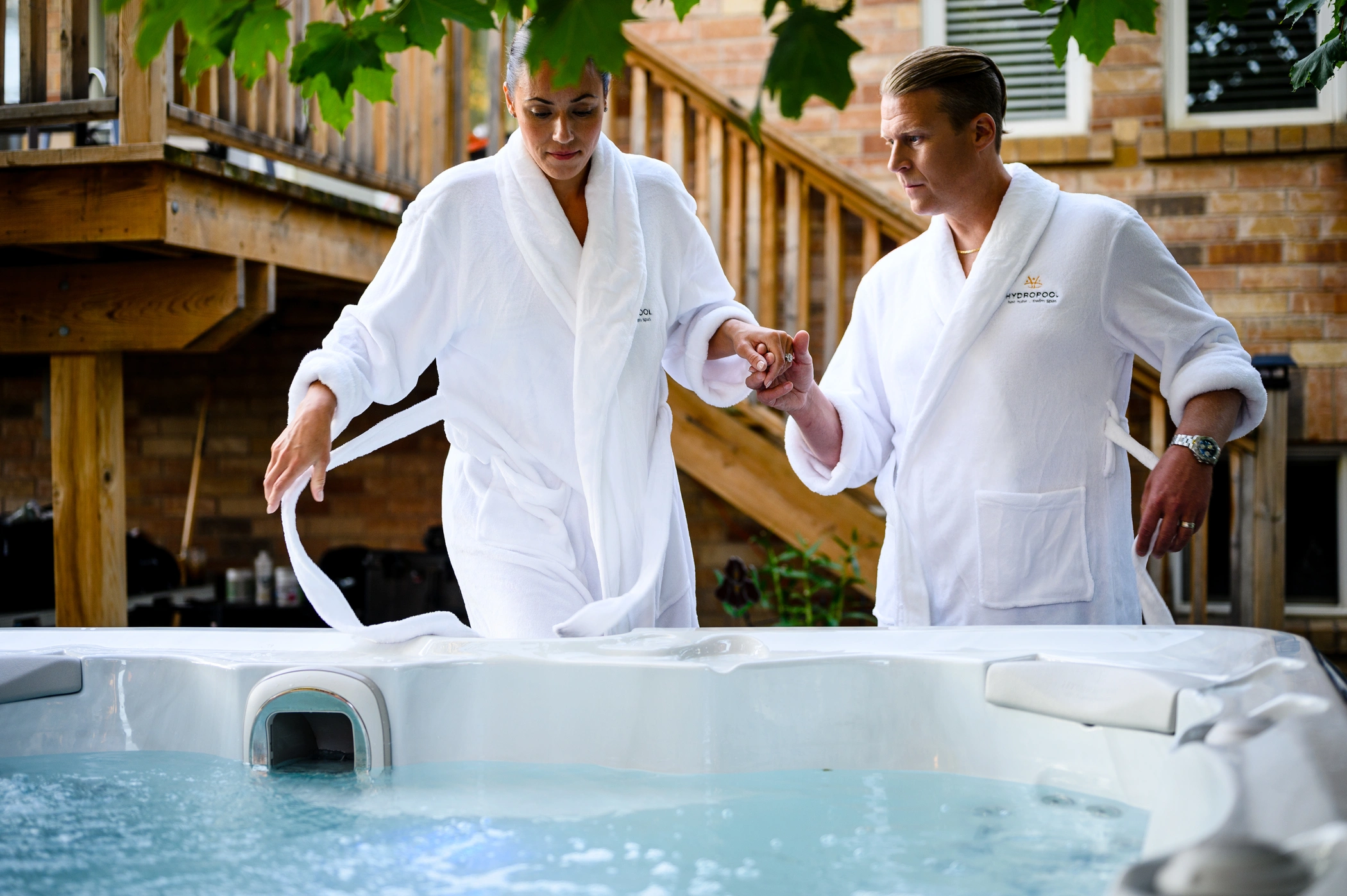
The suit itself doesn’t change for winter, but the plan around it does. Have a robe or a towel within arm’s reach before you get out, not after, since a wet swimsuit in freezing air turns uncomfortable fast. Metal jewelry gets cold enough to be genuinely unpleasant against skin in winter, one more reason to leave it by the tub rather than on. Wet hair can start to freeze within a couple of minutes of stepping out in real cold, so tie it back and have a hat or hood ready if you’re not heading straight inside. None of this is complicated; it’s just easy to forget the first cold night of the season.
Wear this, skip that
| Wear | Skip |
|---|---|
| Polyester, nylon, or spandex swimwear | Cotton, denim, or anything from the gym bag |
| A suit rinsed in plain water | A suit fresh out of a wash with fabric softener |
| Bare skin, or a synthetic rash guard | Rings, chains, and dangling earrings |
| Hair tied back, away from the returns | Loose hair near a skimmer or jet intake |
| A quick rinse-off before you get in | A fresh coat of lotion, sunscreen, or perfume right before |
FAQ
Is there an actual hot tub dress code, and are bikinis okay?
No official one, just a practical one: synthetic fabric over cotton, and check that everything’s secure. Bikinis are perfectly fine; the only real risk is a loosely tied top or bottom working free near jet suction, so a snug fit or a one-piece is the safer call if you’re planning to move around near the jets rather than sit still.
Can I just wear regular clothes in a hot tub?
You can, but you’ll regret it. Cotton and denim soak up water, take forever to dry, and shed lint that ends up in your filter. Anything made for the gym or the street is going to break down faster in hot, chemically treated water than a real swimsuit will.
Is it fine to go without a swimsuit?
For a private soak with family, that’s a personal call and a common one. Shower first either way. It’s the group gatherings where a suit is the easier default.
Why does my new swimsuit make the water foam?
Laundry detergent and fabric softener residue left in swimwear is one of the more common causes of foamy water. A plain-water rinse before the first wear takes care of it.
Should kids wear anything different?
A properly fitted swimsuit or swim diaper, and keep their time in short. Water at or above body temperature isn’t recommended for young kids, so keeping the set point a bit cooler when they’re in matters more than what they’re wearing.
Do I need to take my jewelry off?
Yes. Rings and chains can tarnish from the chemicals, get lost in the filter, or catch near a jet or skimmer opening. It’s an easy thing to forget on the way out the door and an easy one to just make a habit of leaving by the tub.
Now the water’s the only thing your guests notice
None of this takes more than a text to your guest list: real swimsuits, no jewelry, hair tied back, shower first. Handle it before anyone shows up, and the only thing anyone’s talking about the next morning is how good that soak was, not what they’re pulling out of the filter.