
An Honest Review of Plug and Play Hot Tubs: Are They Really Worth It?
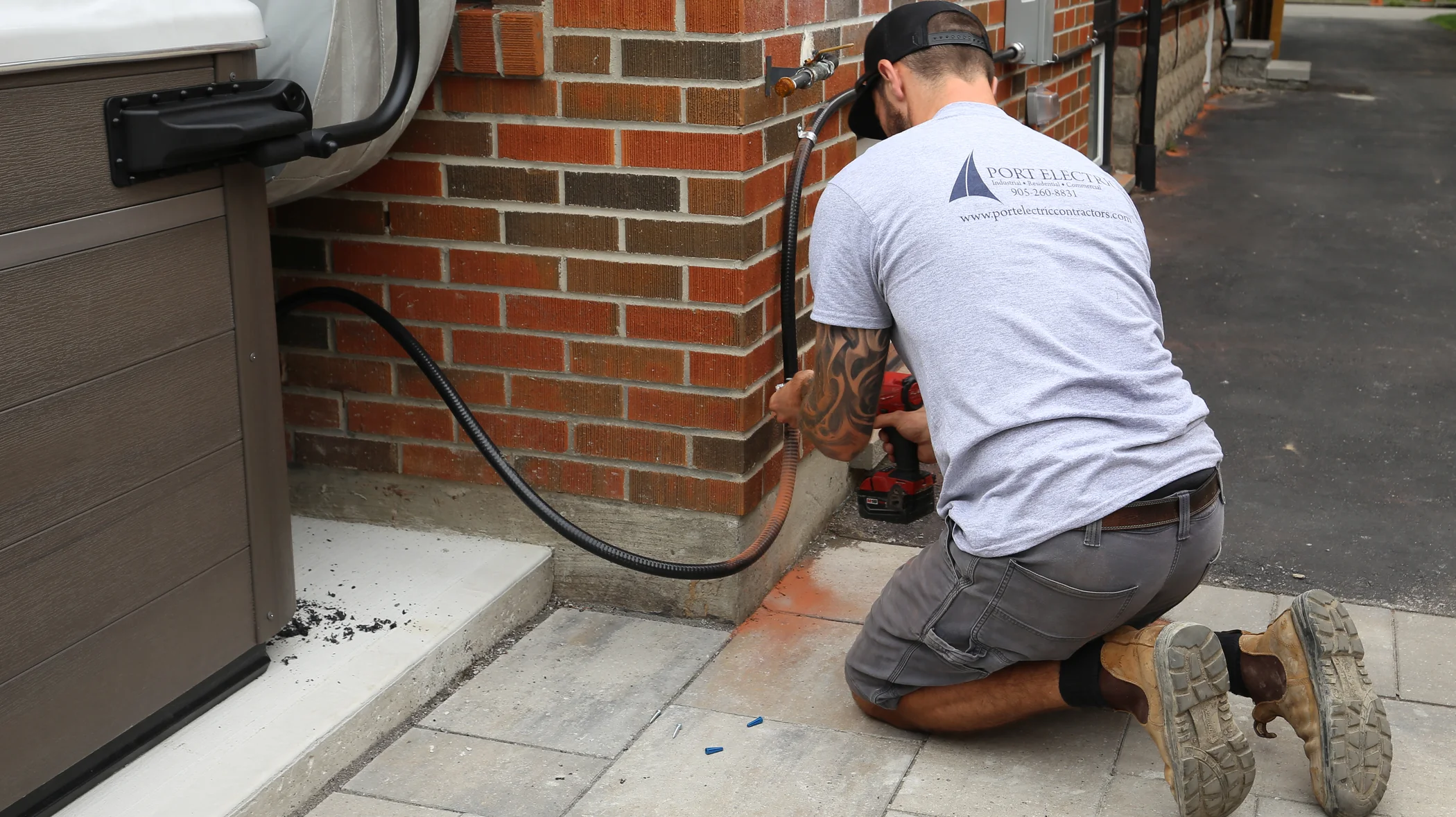
A plug-and-play hot tub, sometimes called a plug-in or portable hot tub, runs on a standard household outlet, no electrician required, which makes it a real way to get into the water without a big first commitment. The honest limitation is amperage: a 15A circuit can’t run the heater and the jets at full power at the same time, and heat-up takes several times longer than a 220V unit. If the plan is to use the hot tub regularly, you should choose a 220V model. Hydropool hot tubs build acrylic tubs that ship 110V-ready and convert to 220V later, so the choice isn’t permanent on day one.

Testing the water before you commit
Somebody plugs in a 110V tub, whether they call it a hot tub, a spa, or a jacuzzi, to see if they’ll use it, then throws a small get-together a few weeks in. The jets kick on, the water starts cooling faster than the heater can keep up. This is the down side to owning a 110V hot tub.
What plug-and-play gets you right
No electrician, a much lower barrier to entry, and the ability to unplug and move it if you’re renting or just not sure yet. For someone testing whether hot tub ownership is even for them, that’s a legitimate reason to start here instead of committing to a full installation.
Where it runs out of runway
A standard outlet gives you 15 amps to work with, and the heater and the jets both want a share of it. Run the jets at full power and the heater backs off; ask for both at once and something has to lose. Heat-up time follows the same math: it takes several times longer to bring the water up to temperature than it does on a 220V unit, which matters most in cold climates where the heater is already working overtime just to hold steady. If a breaker keeps tripping on a setup like this, that ceiling is usually why.
The honest verdict
Weighed plainly, the pros and cons come down to one number: 15 amps. If a hot tub is mostly a once-in-a-while thing, 110V is a perfectly reasonable way to own one. If the point is hosting, jets running while the water stays hot, ready on a schedule instead of a countdown, 220V, the traditional hardwired setup, is what gets you there. That’s not a knock on plug-and-play; it’s just what running jets and heat together requires, and no amount of clever timing changes the amperage.
Hydropool’s answer to the either-or
Most plug-and-play options in this category are lower-cost roto-molded shells, which is part of why the category has a reputation for feeling like a compromise. The Serenity 6610 and the smaller Serenity 4510 are real acrylic Hydropool tubs that ship 110V plug-and-play out of the box. When it’s time for more, a licensed electrician can convert one to 220V by moving a wire inside the spa pack and updating a single control setting, then running the proper 220V supply from the panel. Same tub, no compromise locked in on day one.
Set it up safely either way
Whichever voltage it runs on, it needs its own dedicated, GFCI-protected circuit, never a shared outlet and never an extension cord. The CPSC has been saying this for years about high-draw appliances, and its GFCI fact sheet explains why that circuit is doing more work than it looks like.
110V versus 220V, side by side
| 110V plug-and-play | 220V hardwired (traditional) | |
|---|---|---|
| Circuit | Standard household outlet, dedicated and GFCI-protected | Dedicated 40A+ circuit, installed by an electrician |
| Jets and heater together, full power | No, the two compete for the same 15A | Yes |
| Heat-up time | Several times longer than 220V | Fast enough that timing a soak around it is easy |
| Best for | Renters, first-timers, testing the idea before committing | Anyone hosting regularly or using it through a real winter |
FAQ
Can a plug-and-play hot tub run on an extension cord?
No. It needs its own dedicated, GFCI-protected outlet, not a shared circuit or an extension cord. The CPSC has warned for years about overloaded extension cords causing fires with high-draw appliances, and a hot tub heater qualifies.
Will a plug-and-play hot tub be ready in time for a Saturday night soak?
If you start filling and heating well ahead of time, yes. What it won’t do is keep the water hot while the jets run at full power, so plan around that limitation rather than against it.
Is it true acrylic hot tubs aren’t available as plug-and-play?
Usually, yes, but not always. Most 110V models in this category are lower-cost roto-molded shells. Hydropool’s Serenity 4510 and 6610 are real acrylic tubs that ship 110V plug-and-play and can be converted to 220V later by a licensed electrician.
How does the 110V to 220V conversion work on a convertible model?
On Hydropool’s convertible Serenity models, an electrician moves a wire inside the spa pack and updates one control setting, then runs the proper 220V supply from the panel. It’s a straightforward job for a qualified electrician, not a DIY weekend project.
Why does my plug-and-play tub trip the breaker so often?
A 15A circuit doesn’t have much headroom, and asking it to run the heater and the jets at the same time is often exactly what pushes it over. If it’s tripping regularly rather than occasionally, that’s worth a look before you assume it’s just how these tubs work.
What’s the best plug-and-play hot tub to buy?
That depends on whether you might want to upgrade later. Most 110V options on the market are lower-cost roto-molded shells, full stop. Hydropool’s Serenity 4510 and 6610 are real acrylic tubs that ship 110V-ready out of the box and convert to 220V by a licensed electrician when you’re ready for it, so choosing plug-and-play now doesn’t lock you into the lower-cost category permanently.
Start where you are, upgrade when you’re ready
A Hydropool dealer can walk you through whether a convertible model makes sense for your situation now, and what the 220V upgrade involves when you’re ready for it. If you want the broader case for the brand first, here’s an honest look at what Hydropool gets right and where it fits in the market. Either way, the tub you start with can be the one you finish with.